
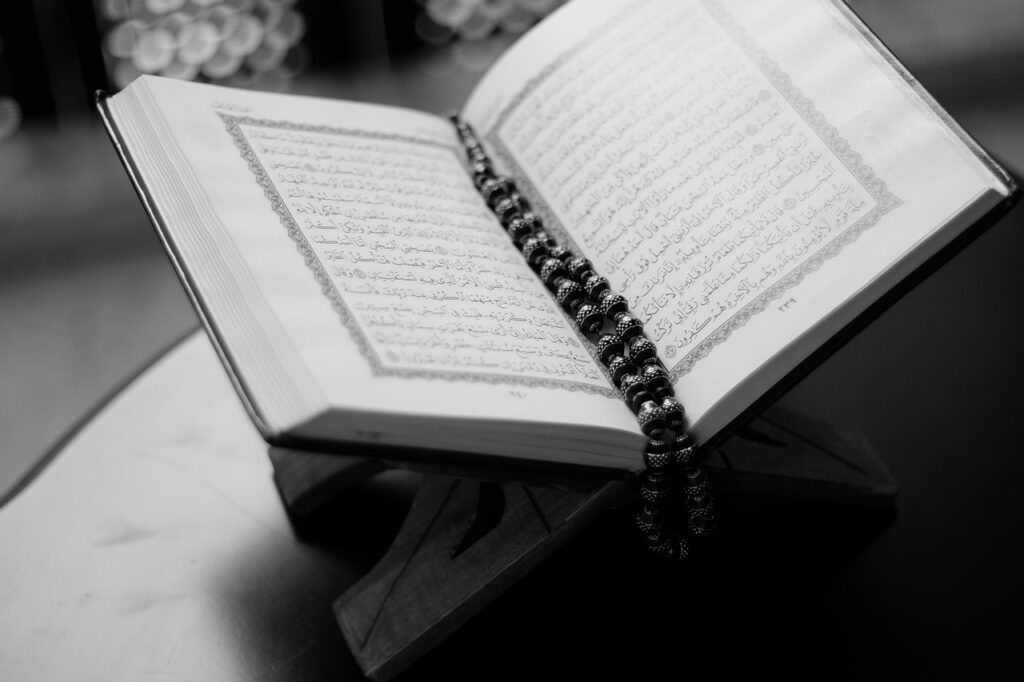
Islam began in the early seventh century in the deserts and trading towns of the Arabian Peninsula. Society at the time was shaped by tribal loyalty, oral poetry, and deep spiritual searching. In the city of Mecca, a merchant named Muhammad would retreat to a cave on Mount Hira to reflect on the condition of his people.
Around the year 610, he received the first revelation of what Muslims believe to be the word of God. These revelations, later compiled as the Quran, called for the worship of one God and urged justice, honesty, and compassion. The message challenged powerful leaders but offered dignity and hope to the poor and oppressed.
Persecution followed. In 622, Muhammad and his followers migrated to Medina in an event known as the Hijra, which marks the beginning of the Islamic calendar. There, the first Muslim community was established. From these early roots, Islam grew into a faith and civilization that would shape regions across Asia, Africa, and Europe.
After the Prophet Muhammad’s ﷺ death in 632, leadership passed to a series of caliphs. Under their guidance, Muslim rule expanded beyond Arabia into former Byzantine and Persian lands. This period saw the rapid growth of cities and institutions.
Centers such as Baghdad, Damascus, and Cairo became known for scholarship and culture. Muslim scholars advanced medicine, mathematics, astronomy, and philosophy while preserving earlier knowledge. Architectural achievements and thriving trade networks reflected a confident and dynamic civilization.
Political differences led to divisions, including the development of Sunni and Shia traditions. Over time, Islamic societies faced internal struggles and encounters with European powers. Yet they continued to adapt and evolve.
Today, the history of Islam is not a single story but many stories woven together. It includes empires and scholars, poets and merchants, reformers and mystics. It is a history of both faith and human effort.
Islamic civilization left a lasting mark on global heritage through science, literature, art, and law. Universities and libraries flourished. Trade routes connected distant lands, encouraging exchange of ideas and culture.
At its heart, however, Islam has always centered on spiritual practice. Belief in one God, daily prayer, charity, fasting, and pilgrimage remain constant foundations. These practices have sustained Muslim communities across centuries of change.
Understanding the history of Islam offers insight into how belief can shape societies and inspire resilience. It reminds us that civilizations are living stories, formed through struggle, creativity, and hope, and that the story of Islam continues to unfold in the modern world.